
Your natural beauty begins with a confident smile.
Restoring Strength and Completing Your Smile
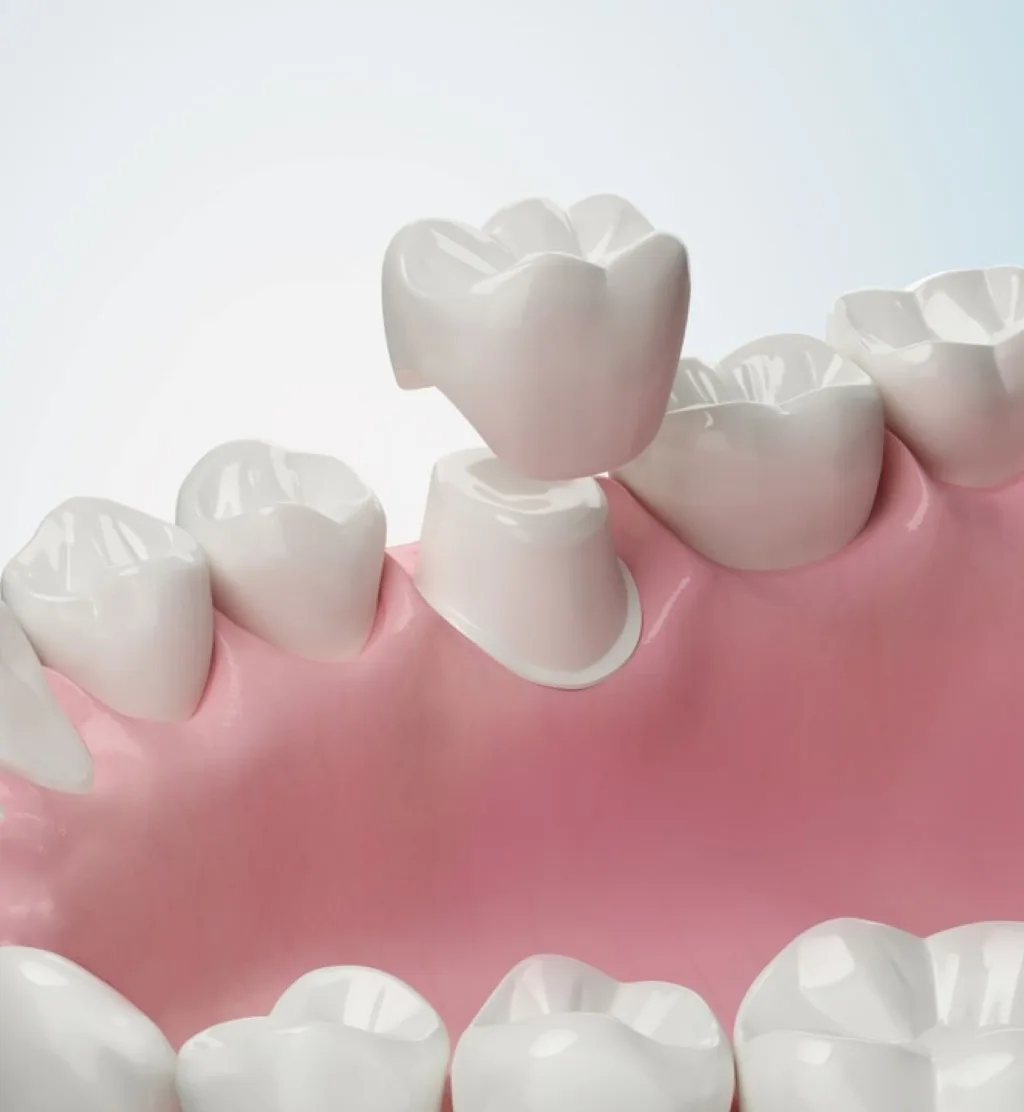
When a tooth is severely damaged or weakened by a large filling, a simple repair isn’t enough to withstand chewing forces. A dental crown acts as a protective “cap” that covers the entire visible portion of the tooth, restoring its original shape and strength.
For those with a missing tooth, a dental bridge uses the strength of neighboring teeth to hold a replacement tooth in place, “bridging” the gap permanently.
We use high-quality ceramics and zirconia that offer the durability of metal without the unsightly grey lines. The process involves shaping the tooth, taking precise impressions, and fitting a custom-crafted restoration that aligns perfectly with your bite. Whether it is a single crown or a multi-unit bridge, the outcome is a fully functional smile that looks completely natural.
When Dental Crowns or a Bridge Make Sense
A crown covers the whole visible part of a tooth. It is usually advised when:
- A large filling leaves too little natural tooth to hold another filling
- A tooth is cracked or a cusp has broken off
- A back tooth has had root canal treatment and needs protection from fracture
- A tooth is badly discolored or misshapen
- An implant needs a visible tooth on top
A bridge replaces one or more missing teeth by anchoring an artificial tooth to crowns on the neighboring teeth. It suits gaps where those neighbors are healthy and firm, and is often chosen by people who notice changes in chewing or speaking after losing a tooth.
A crown is not needed if a filling or onlay can restore the tooth safely; that keeps more natural tooth. A bridge is not ideal when the neighbors are weak, loose or affected by gum disease, or when they are healthy and unfilled, because shaping them removes sound enamel. In those cases a dental implant or a removable denture may be the better choice.
How Crowns and Bridges Are Made and Fitted
- Assessment: The tooth or gap is examined and digital X-rays check the roots, bone and any previous root canal treatment.
- Preparation: Under local anaesthetic, the tooth (or the two supporting teeth for a bridge) is reshaped to make room for the restoration.
- Impressions and shade: Precise impressions and a shade match are taken and sent to the dental laboratory.
- Temporary: A temporary crown or bridge protects the prepared teeth while the final one is made.
- Fitting: At a second visit the temporary is removed, and the final restoration is checked for fit, bite and appearance, then cemented.
Most treatment takes two visits. Materials include all-ceramic, zirconia and porcelain fused to metal; the choice depends on the tooth position and bite forces.
Living With a Temporary and a New Crown
A temporary crown is held with weaker cement. Chew on the other side, avoid sticky or very hard foods, and slide floss out sideways rather than pulling it up. If the temporary comes off, keep it and contact the clinic so it can be recemented.
After fitting, mild sensitivity and slightly sore gums for a few days are normal. Call the clinic if your bite feels high, if pain increases or throbs, or if the crown feels loose. Clean under a bridge daily with a floss threader, superfloss or a water flosser, because food trapped under the false tooth can cause decay and gum disease in the supporting teeth.
What Affects the Plan, the Cost and How Long It Lasts
Factors that shape the plan and the cost include:
- The number of units, from a single crown to a multi-tooth bridge
- The material chosen
- Whether a tooth needs a core build-up, root canal treatment or gum treatment first
- The health of the supporting teeth and bone
Crowns and bridges can last many years, but they are not permanent. The tooth underneath can still decay at the edge of the crown, ceramic can chip, and a bridge depends on the long-term health of its supporting teeth. Daily cleaning, regular checkups and a night guard for people who grind give them the best chance of a long life.
For a single missing tooth, the main alternative to a bridge is a dental implant. An implant replaces the root and leaves the neighboring teeth untouched, but it needs enough healthy jawbone, minor surgery and a healing period of several months. A bridge is usually completed sooner and without surgery. Your dentist can explain which option suits your gap.
Who Provides This Treatment
Crowns and bridges at Mankhool Dental Clinic are provided by Dr. Christopher Cura Vicencio, a General Dentist at the clinic since 2011 and a graduate of the University of the East College of Dentistry, whose work includes restorative and cosmetic dentistry. Where a tooth first needs root canal treatment or an implant is a better option, he works with the clinic’s specialists, Dr. Madhu Mathews and Dr. Harikrishnan G.
Related Guides
- Bridge vs Implant for Missing Tooth
- Ceramic Crowns for Front Teeth That Look Natural
- Cracked Teeth Treatment Guide for Fast Relief
- How Long Do Dental Crowns Last?
- Same Day Dental Crowns Guide for Busy Smiles
- Signs of a Failing Dental Crown to Watch For
- Temporary Crown Care: What to Do Until Your Next Visit
Why Choose Mankhool Dental Clinic ?
Premium Materials
We use Zirconia and E-max ceramics for superior strength and natural aesthetics.Precision Fit
Our digital impressions ensure a tight seal to prevent future decay.Color Matching
We work with expert technicians to match the shade perfectly to your adjacent teeth.Metal-Free Options
We offer options that eliminate the unsightly "black line" at the gum level.Efficient Turnaround
We work with top labs to get your permanent restoration back quickly.Long-Term Warranty
We stand by the quality of our lab work and materials.Other Treatments We Offer
Oral Examinations & Screenings
Digital X-rays & Diagnostics
Tooth Extractions
Difficult Tooth Removal
Tooth Colour Fillings
Dentures
Fluoride & Sealants
Mouthguards & Nightguards
Bonding
Teeth Cleaning
Zoom Whitening
They fixed my chipped tooth perfectly. The filling looks and feels natural.
My crown was done flawlessly. Fit, color, and comfort were all spot-on.


Frequently Asked Questions
What is the difference between a crown and a bridge?
Does the process hurt?
How long do crowns last?
Will it look fake?
How do I clean under a bridge?
Can a crown get a cavity?
Why choose us as your dental services provider?
Our office is equipped with the latest equipment and technology to bring a high level of excellence to the care we provide. You’ll feel right at home thanks to our friendly team and service-minded approach.
Dr. Christopher Cura
At Mankhool Dental Clinic, we blend advanced expertise with genuine care to transform your dental visits into empowering experiences. Choose us for smiles that last.
Ready to Book Your Appointment?
Contact us today to schedule your visit and take the first step toward a healthier smile.
