
Your natural beauty begins with a confident smile.
Healing Infections from the Inside Out
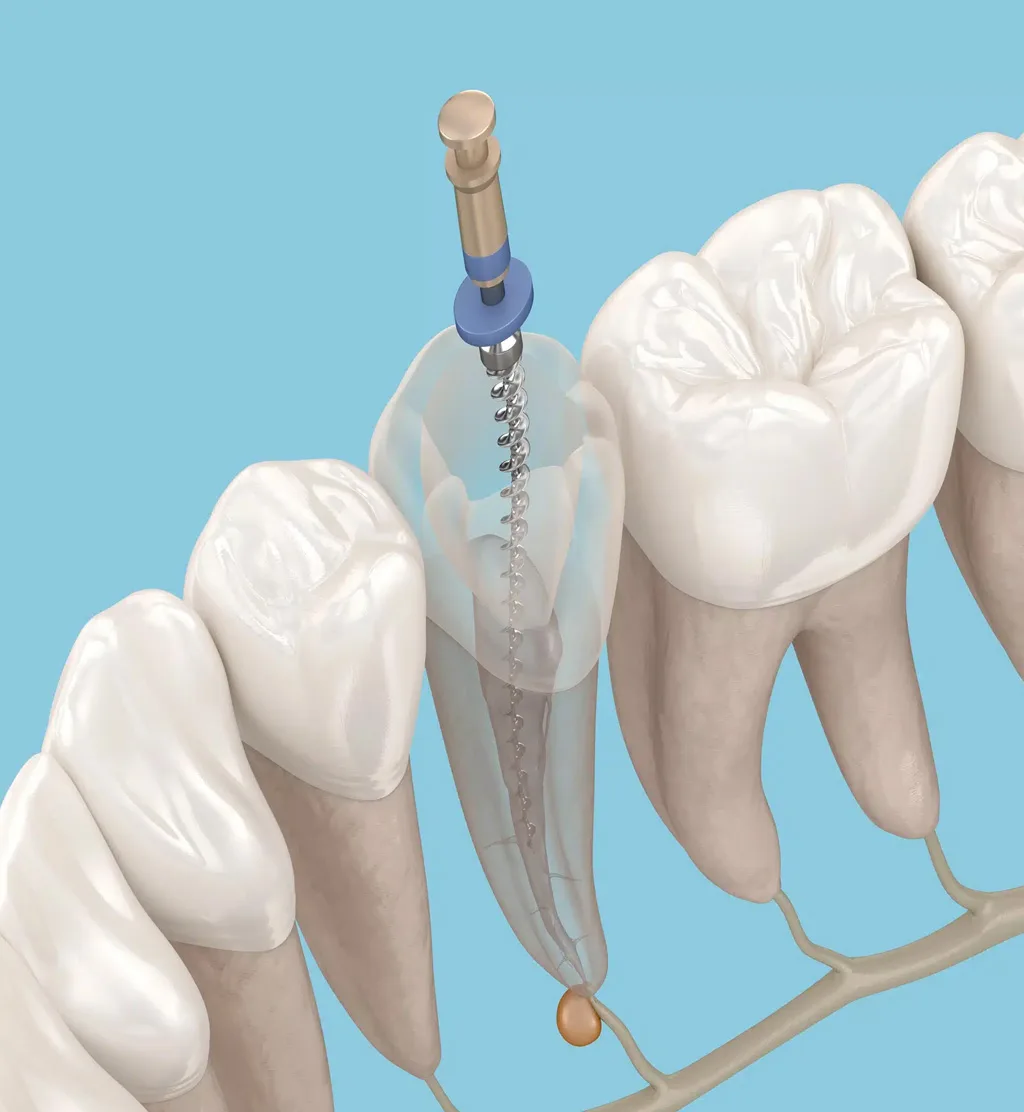
When a cyst or infection develops in the bone at the tip of a tooth’s root, many assume surgery is the only option. However, our non-surgical approach focuses on eliminating the source of the infection from within the tooth itself. By thoroughly cleaning and disinfecting the root canal system, we cut off the food supply to the bacteria, allowing your body’s natural immune system to heal the surrounding bone.
This conservative method is highly effective and avoids the need for incisions or stitches in the gums. It is a gentle, minimally invasive way to resolve significant dental infections. Over time, follow-up X-rays typically show the bone regenerating and the dark spots disappearing, proving that the tooth is healthy and functional again without surgical intervention.
When Non-Surgical Root Canal Treatment Is the First Choice
Infection inside a tooth can spread to the bone at the root tip and form a periapical lesion, which shows as a dark area on an X-ray. Some of these lesions are granulomas, some are cysts, and an X-ray alone usually cannot tell them apart. Because both are driven by bacteria in the root canal system, non-surgical root canal treatment, which works from inside the tooth, is generally the first approach, even for larger lesions.
It may suit you if you have:
- A dark area at a root tip found on an X-ray
- A tooth that has darkened after an old injury
- A gum boil or recurring swelling near one tooth
- Pain on biting with a tooth that no longer responds to cold
It is not the right option when the root is fractured or the tooth cannot be restored, or when a lesion does not behave like an infection of dental origin; then a biopsy, surgery or extraction may be needed.
How the Infection Is Treated From Inside the Tooth
- Diagnosis: Digital X-rays and pulp tests confirm which tooth is the source.
- Local anesthetic: The area is numbed before treatment.
- Cleaning and disinfection: The canals are opened, cleaned and disinfected under the dental operating microscope. Any pus is allowed to drain through the tooth.
- Medicated dressing: An antibacterial paste, typically calcium hydroxide, is left in the canals. For large lesions this may be renewed over several visits.
- Sealing: Once symptoms have settled and the canals are dry, they are filled and sealed.
- Restoration: A crown or filling closes the tooth.
Recovery and Follow-Up X-Rays
The tooth may feel tender for a few days after each visit, and most people manage with over-the-counter pain relief. There are no stitches and no gum wound to care for.
Bone healing is gradual. The lesion usually starts to shrink on X-rays within 6 to 12 months, and larger lesions can take longer to fill in completely, so follow-up X-rays are part of the treatment. Call the clinic if swelling returns, a gum boil reappears, or pain increases rather than settles. Facial swelling with fever, or difficulty swallowing or breathing, needs emergency care.
What Affects the Plan, and When Surgery Is Still Needed
The plan and fee depend on the size of the lesion, how many canals the tooth has, how many dressing visits are needed, whether the tooth was treated before, and the final restoration.
Many lesions heal after thorough non-surgical treatment, but not all. If the X-rays show no improvement or symptoms persist, endodontic surgery (an apicoectomy, in which the root tip and the surrounding infected tissue are removed through the gum) is the usual next step. Surgery also allows tissue to be sent for testing when a lesion is unusual. Starting non-surgically keeps that option open while giving the tooth the chance to heal without an incision.
Non-Surgical Treatment Versus Apicoectomy
Non-surgical treatment removes the source of infection inside the canals, so the whole root canal system is disinfected and sealed. It needs no gum incision, though large lesions may need several visits. An apicoectomy treats the problem from outside the tooth: the gum is opened, the root tip is trimmed and sealed, and stitches are placed. Most people return to normal activities the next day, with the bone healing over the following months. It is usually reserved for cases where infection persists after a well-done root canal or where the canal cannot be treated from inside.
Who Provides This Treatment
Non-surgical root canal treatment at Mankhool Dental Clinic is provided by Dr. Madhu Mathews, Specialist Endodontist and clinical lead of the clinic since 2008. He holds a BDS and an MDS from Manipal College of Dental Sciences and has practised in Dubai since 1999, with a focus on microscopic endodontics. He plans the dressing visits and reviews your follow-up X-rays to track bone healing.
Related Guides
Why Choose Mankhool Dental Clinic ?
Minimally Invasive
We heal large infections without cutting the gums.Biological Healing
We remove the bacteria so your body can regenerate the bone naturally.Safety First
Avoiding surgery reduces risks and recovery time.Holistic Approach
We focus on eliminating inflammation to improve systemic health.Advanced Medication
We use intracanal medicaments to sterilize the tooth between visits.Proven Results
We have a long track record of healing large cysts non-surgically.Other Treatments We Offer
Root Canal Treatment
Root Canal Treatment Under Microscope
Complex Root Canal Treatments
Repeat Root Canal Treatments
Revascularization and regenerative therapy
My root canal was surprisingly comfortable. Pain disappeared instantly, and the team was extremely gentle.
Excellent endodontic care. They saved my tooth and made the whole process stress-free.


Frequently Asked Questions
What is a periapical cyst?
Do cysts need surgery?
How do I know if it is healing?
Is there a recovery period?
What if it doesn't heal?
Is this treatment permanent?
Why choose us as your dental services provider?
Our office is equipped with the latest equipment and technology to bring a high level of excellence to the care we provide. You’ll feel right at home thanks to our friendly team and service-minded approach.
Dr. Madhu Mathews
At Mankhool Dental Clinic, we blend advanced expertise with genuine care to transform your dental visits into empowering experiences. Choose us for smiles that last.
Ready to Book Your Appointment?
Contact us today to schedule your visit and take the first step toward a healthier smile.
