
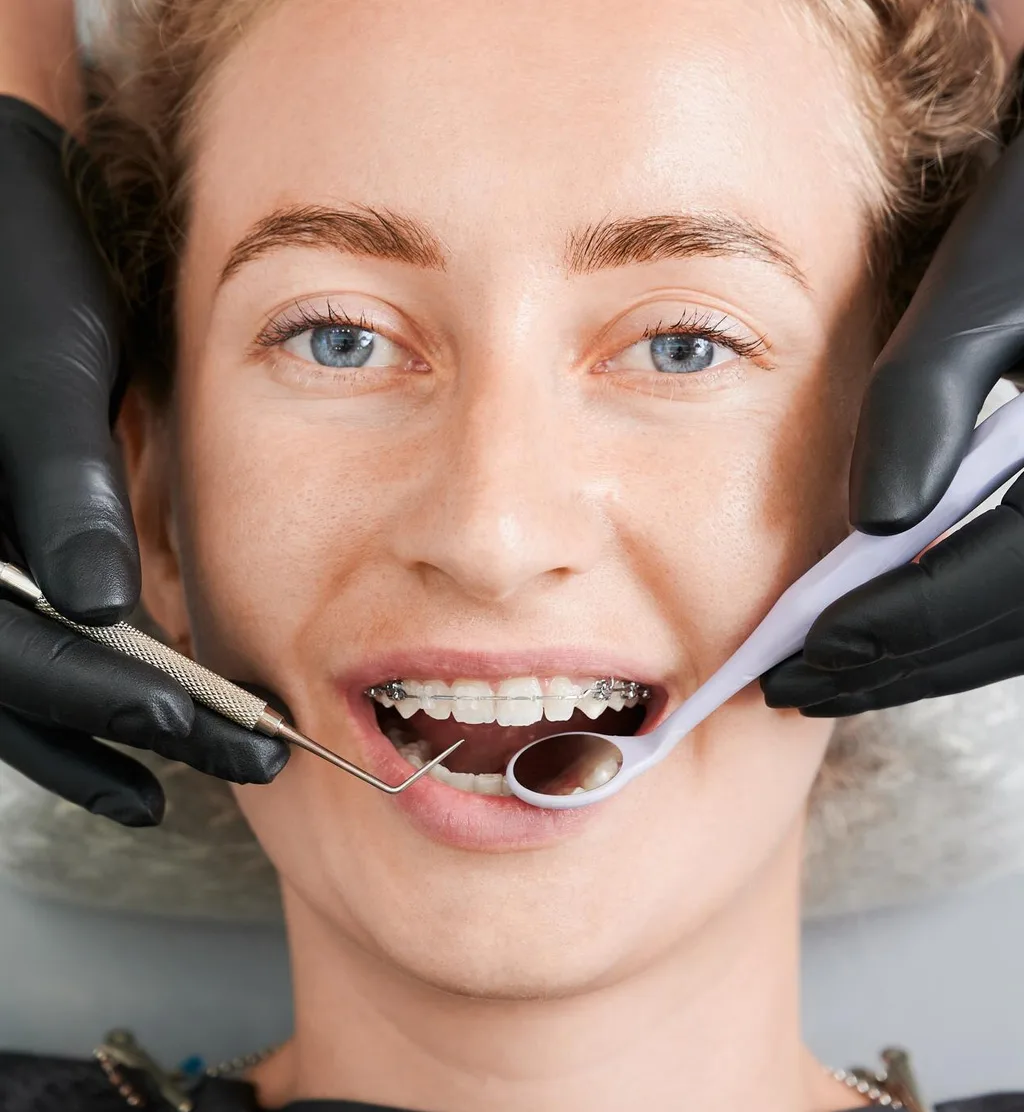
Your natural beauty begins with a confident smile.
Getting Your Smile Back on Track
It is common for individuals who had braces in their youth to see their teeth shift back over time, especially if retainers weren’t worn consistently. This “relapse” can be frustrating, but it is easily fixable. Orthodontic retreatment is dedicated to correcting these minor shifts to restore the perfect alignment you once had.
Because the teeth have been straightened before, retreatment is often faster and less complex than the initial therapy. We can frequently use clear aligners or a short course of braces to nudge the teeth back into their ideal positions. We then focus on robust retention strategies, ensuring that once your smile is perfect again, it stays that way permanently.
Who Needs Orthodontic Retreatment
After braces or aligners, the gum and ligament fibers around each tooth take months to reorganize, and they tend to pull teeth back toward their old positions. Growth, aging changes and pressure from the lips and tongue continue to act for life. Relapse is most often linked to retainers that were lost, broken or stopped, but it can also happen with a bonded retainer in place if the wire bends or a bond fails.
Retreatment may suit you if you notice:
- Lower front teeth crowding again
- A gap reopening between the upper front teeth
- A single tooth rotating or tipping beside a fixed retainer
- Your old retainer no longer fits
- The bite feeling different when you close
Not every change needs active treatment. Very small shifts may be managed with a new retainer. If the original problem was in the jaws rather than the teeth, or your gums have changed since, a fuller reassessment may lead to a different plan, including gum treatment first.
How Retreatment Works
- Review of history: Previous records, if you have them, help show what has moved and why.
- Examination: Teeth, gums and any old bonded retainer are checked, with digital X-rays to assess roots and bone.
- Options: Depending on the movement, these include a new retainer only, clear aligners such as Invisalign, or a short course of fixed braces on the affected teeth.
- Correction: Teeth are realigned with regular reviews. No anaesthetic is needed for aligners or for bonding brackets. Because only some teeth may need moving, treatment is often limited to the affected area, though this depends on the bite.
- Retention redesign: The retention plan is changed to address the cause of the relapse, which may combine a bonded wire with a removable retainer.
Keeping Your Second Result
Soreness is usually mild and short-lived. The more important aftercare is long term: wear removable retainers exactly as instructed, bring them to check-ups so the fit can be assessed, and clean carefully around any bonded wire with floss threaders or small interdental brushes.
If you are having aligners for retreatment, expect a few days of pressure with each new set, and follow the same wear rules as first-time patients. If partial braces are used, the cleaning advice for brackets applies to the treated teeth.
Call the clinic promptly if a bonded retainer feels loose, a tooth beside it starts to move, or a removable retainer cracks or stops fitting. Repairing a retainer early is far simpler than correcting another relapse.
What Affects the Plan and How Long It Lasts
- How far the teeth have moved and how many are involved
- Whether the bite, not just alignment, has changed
- Gum and bone health, especially in adults
- Existing crowns, implants or missing teeth
- Aligners versus partial or full braces
Research shows relapse is hard to predict for any individual, which is why retention is treated as lifelong. A second correction lasts as long as the retention plan is followed and checked. Ask for your retainers to be examined at routine dental visits, and replace removable retainers when they wear, crack or stop fitting snugly.
New Retainer or Active Retreatment?
A new retainer only holds teeth where they are now; it cannot move them back. It suits very small changes you are happy to accept. Active retreatment with aligners or braces is needed when teeth have moved enough to bother you, affect your bite or make cleaning harder, and it should always be followed by a new retainer.
Who Provides This Treatment
Orthodontic retreatment at Mankhool Dental Clinic is provided by Dr. Saji John Mathews, Specialist Orthodontist, who has practised in the UAE since 1997 (BDS, Mysore University; MDS, Kuvempu University). He treats adults and children with fixed braces and clear aligners, and plans both the correction and a new retention approach for patients whose teeth have shifted after earlier treatment.
Why Choose Mankhool Dental Clinic ?
Relapse Specialists
We understand why teeth shifted back and how to fix it.Short Duration
Retreatment is often much faster than the original treatment.Cost-Effective
Minor shifts can be corrected with simpler, less expensive methods.Invisalign Focus
We often use clear aligners for retreatment, avoiding metal braces.Fixed Retention
We install permanent bonded retainers to ensure they don't move again.Bite Stabilization
We ensure the new position is functional, not just cosmetic.Other Treatments We Offer
Invisalign
Orthodontics
Interceptive Orthodontics
Adult Orthodontics
Orthodontic for Children
My braces treatment is going smoothly - the team is patient and very supportive.
The aligners are comfortable, and I can already see the difference in my smile.


Frequently Asked Questions
Why did my teeth move?
Do I need full braces again?
Can I just get a new retainer?
How long will it take?
Is it cheaper?
Will wisdom teeth make them move again?
Why choose us as your dental services provider?
Our office is equipped with the latest equipment and technology to bring a high level of excellence to the care we provide. You’ll feel right at home thanks to our friendly team and service-minded approach.
Dr. Saji John Mathews
At Mankhool Dental Clinic, we blend advanced expertise with genuine care to transform your dental visits into empowering experiences. Choose us for smiles that last.
Ready to Book Your Appointment?
Contact us today to schedule your visit and take the first step toward a healthier smile.
