
Your natural beauty begins with a confident smile.
Advanced Access for Thorough Healing
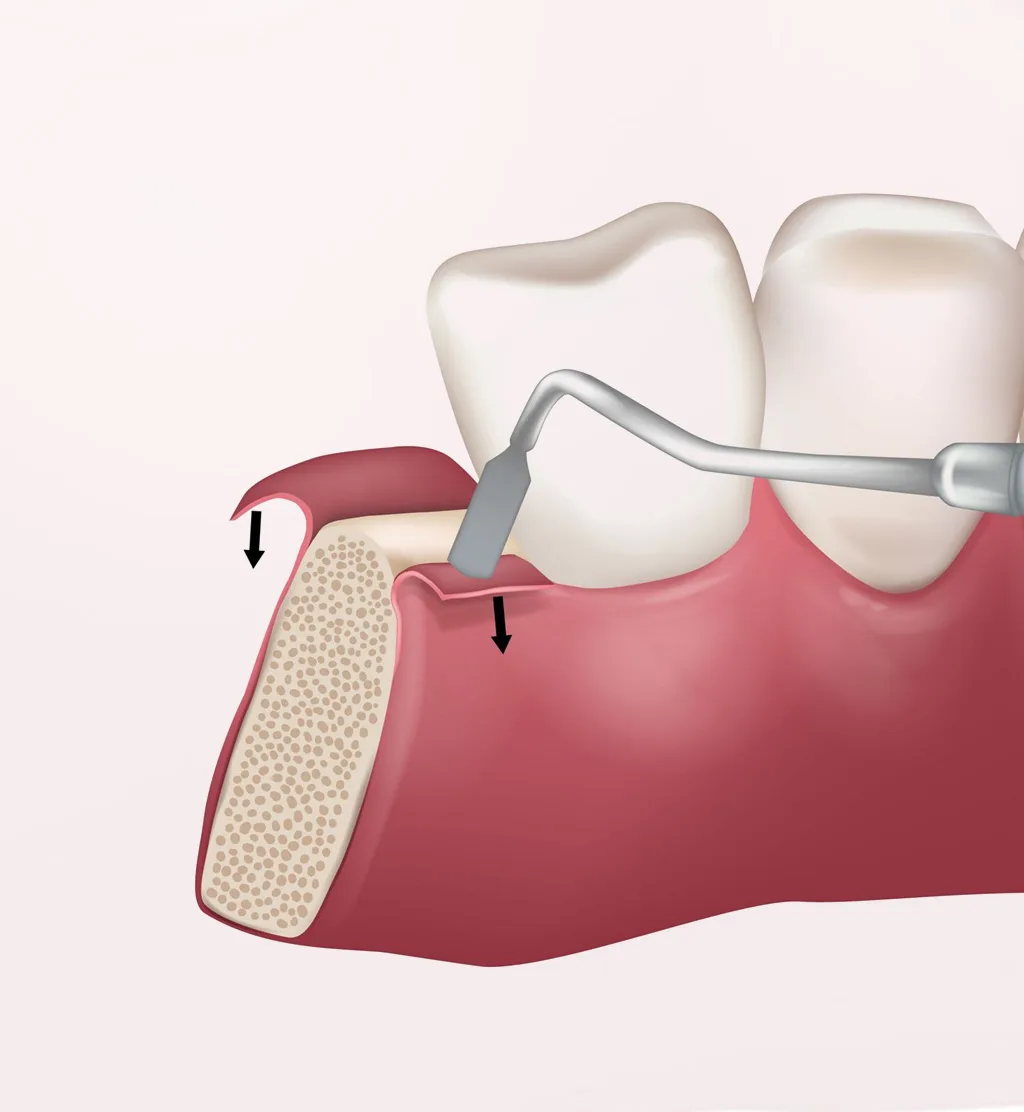
In cases of advanced periodontitis where deep pockets remain after initial cleaning, Flap Surgery may be necessary to save the teeth. This procedure involves gently lifting the gum tissue to gain direct access to the roots and underlying bone. This allows us to remove deep-seated tartar and infection that is otherwise inaccessible, and to repair bone defects caused by the disease.
Once the area is thoroughly cleaned, the gums are positioned back against the teeth to reduce pocket depth. This makes it easier for you to keep your teeth clean at home and creates an environment where the gums can reattach firmly. It is a precise, vision-driven treatment aimed at stabilizing your oral health and preventing further bone loss.
When Periodontal Flap Surgery Is Recommended
Periodontal flap surgery, also called pocket reduction surgery, is considered when gum pockets stay deep and keep bleeding at the re-evaluation visit several weeks after scaling and root planing. It is usually the second phase of gum treatment, not the first. Typical situations include:
- Pockets that remain deep after non-surgical treatment
- Tartar trapped in deep or awkward areas, such as between the roots of back teeth
- Uneven bone loss around a tooth, where reshaping or regenerating bone may help
Surgery may not be the right choice if home cleaning is not yet consistent, if smoking or poorly controlled diabetes would compromise healing, or if a tooth has so little bone left that it cannot be kept. In those cases the options are continued non-surgical care with closer maintenance, or extraction and tooth replacement.
Flap surgery is different from a gum graft. A flap procedure treats infection and pocket depth around teeth, while a graft adds tissue to cover receding roots.
What Happens During Flap Surgery
- Planning: Updated pocket charting and digital X-rays identify which teeth need surgery.
- Numbing: The area is numbed with local anesthetic, so you should feel pressure rather than pain.
- Opening the flap: Small incisions allow the gum to be folded back from the teeth.
- Cleaning: Tartar and infected tissue are removed from the roots under direct vision.
- Bone treatment: Where bone is irregular, it may be smoothed so the gum can reattach. Where the defect suits it, graft material or a membrane may be placed to encourage regeneration.
- Closure: The gum is repositioned snugly around the teeth and stitched.
One area, often a quarter of the mouth, is usually treated per visit, so a full plan can take several appointments.
Recovery and Aftercare
Swelling and discomfort typically peak in the first two to three days and then ease. Follow the clinic’s instructions on medicines and any antiseptic mouthwash, eat soft food away from the surgical site, and avoid smoking and strenuous exercise for the first days. Mild sensitivity to cold is common once the gums settle. Brush the rest of the mouth normally and clean the surgical area only as advised until it has healed. A review visit checks healing, and stitches are taken out if they are not the dissolving type. Over the following weeks the gum firms up, and your periodontal maintenance schedule then begins.
Call the clinic for bleeding that will not stop with gentle pressure, pain or swelling that increases after day three, loose or broken stitches, pus, or a fever. Facial swelling with difficulty swallowing or breathing needs emergency care.
What Affects the Plan and the Long-Term Outcome
- Number of areas treated and pocket depths
- Whether bone reshaping or regenerative materials are needed
- Tooth type, since molars with bone loss between the roots are harder to treat
- Smoking, diabetes control and home cleaning
Shallower pockets are easier to keep clean, which lowers the risk of further bone loss, but results depend on maintenance. Most patients need professional periodontal maintenance every few months for the long term. Teeth with advanced bone loss may still be lost despite treatment.
Flap Surgery vs Repeating Deep Cleaning
Repeating deep cleaning avoids surgery but is done without direct sight of the roots, so deep or complex pockets often stay infected. Flap surgery gives direct access and lets the bone be treated, at the cost of a surgical recovery. Your gum measurements after the first round of treatment usually show which approach suits each tooth.
Who Provides This Treatment
Periodontal flap surgery at Mankhool Dental Clinic is performed by Dr. Harikrishnan G, a specialist in Periodontics and Implantology with more than 20 years of experience. He holds an MDS from Government Dental College, Trivandrum, and is a former Adjunct Professor at the University of Sharjah. His clinical work covers periodontal therapy, bone regeneration and laser gum treatment.
Related Guides
Why Choose Mankhool Dental Clinic ?
Direct Access
We gain access to deep infection that instruments cannot reach blindly.Bone Repair
We can smooth irregular bone contours to reduce bacteria traps.Specialist Care
Performed by Dr. Harikrishnan, a specialist Periodontist.Vision Driven
We see exactly what we are cleaning, ensuring thorough removal of calculus.Pocket Reduction
The primary goal is to reduce pocket depth so you can clean your teeth easily.Regenerative Potential
We can place bone or tissue grafts during the surgery if needed.Other Treatments We Offer
Deep Cleaning & Curettage
Bone Grafting & Tissue Grafting
Simple & Complex Implant supported restorations
Implant surgery and restoration
My implant feels just like a real tooth. The entire process was seamless and well-managed.
Excellent implant service - restored my bite and confidence.


Frequently Asked Questions
What is flap surgery?
Is it painful?
Will I have stitches?
Will my teeth look longer?
How long is recovery?
Is it a cure?
Why choose us as your dental services provider?
Our office is equipped with the latest equipment and technology to bring a high level of excellence to the care we provide. You’ll feel right at home thanks to our friendly team and service-minded approach.
Dr. Harikrishnan G
At Mankhool Dental Clinic, we blend advanced expertise with genuine care to transform your dental visits into empowering experiences. Choose us for smiles that last.
Ready to Book Your Appointment?
Contact us today to schedule your visit and take the first step toward a healthier smile.
